When the AI behaves badly, most teams add a line to the prompt. It is fast, and it often doesn’t hold, because many problems were never prompt problems. This map shows where each kind of decision lives, and where each kind of fix belongs.
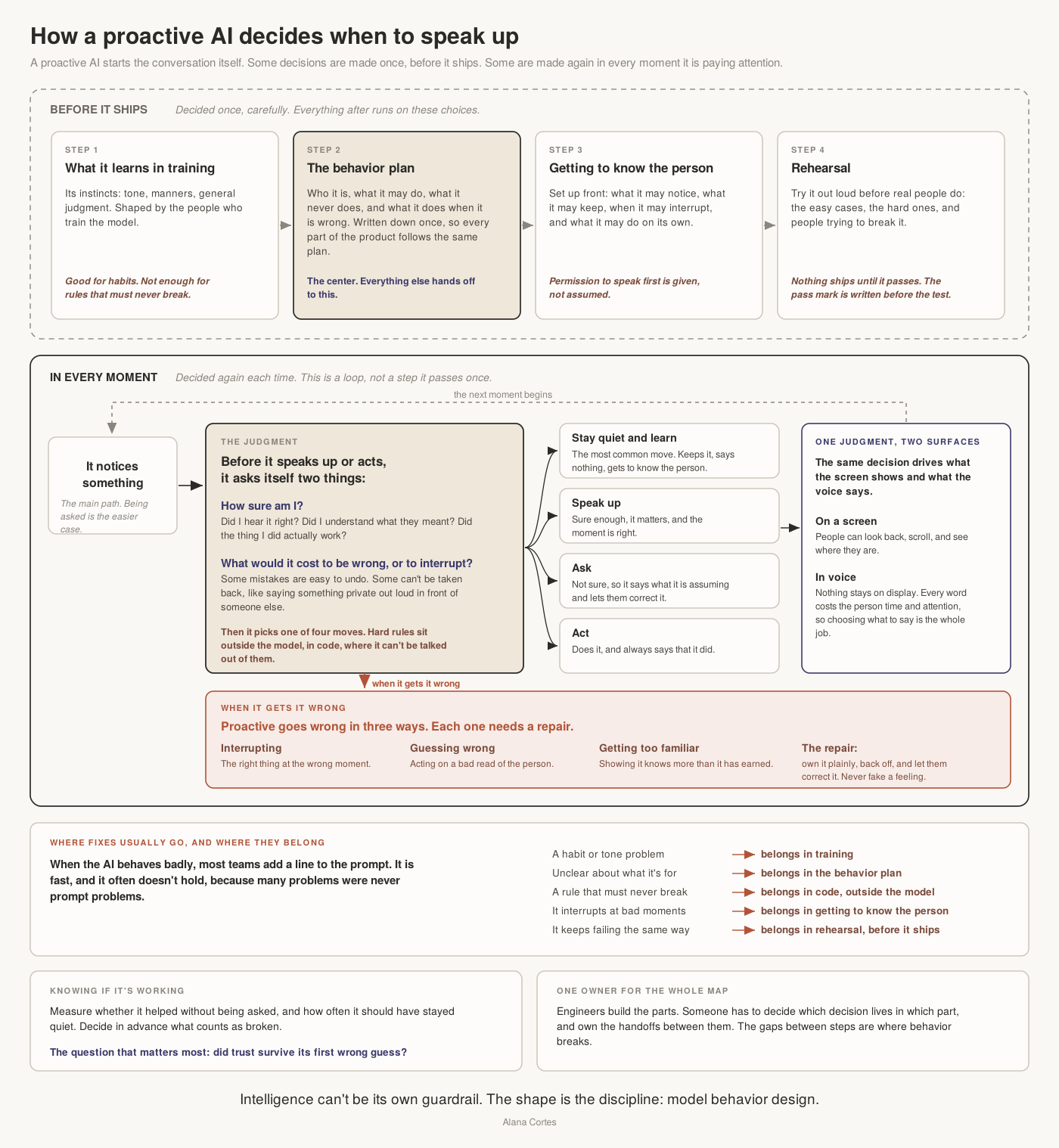
A proactive AI starts the conversation itself. Some decisions are made once, before it ships. Some are made again in every moment it is paying attention.
When the AI behaves badly, most teams add a line to the prompt. It is fast, and it often doesn’t hold, because many problems were never prompt problems. This map shows where each kind of decision lives, and where each kind of fix belongs.
If you’re building agentic or multimodal systems and the question of when a model should help, ask, or refuse is still unowned — that’s my seam.